Earliest settlement at Burntisland
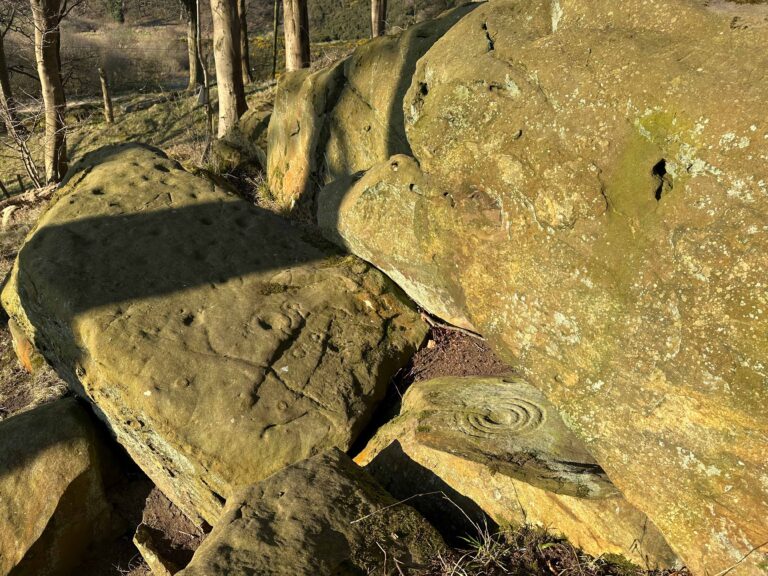
Bronze age: There is prehistoric evidence of habitation in this area with cup and ring marked rock art at the west Binn. These carvings are thought to be Bronze aged – from around 2,000 B.C. Interestingly, there are roughly carved crosses on rocks around the rock art outcrop that are thought to be early medieval. Perhaps these were a Christian attempt to ‘contain’ the pagan site?
Iron Age: There are remains of an iron age fort from around 450 B.C. on Dunearn hill (fort of the ‘Irish’?) and remains of roundhouses on its north-west flank.
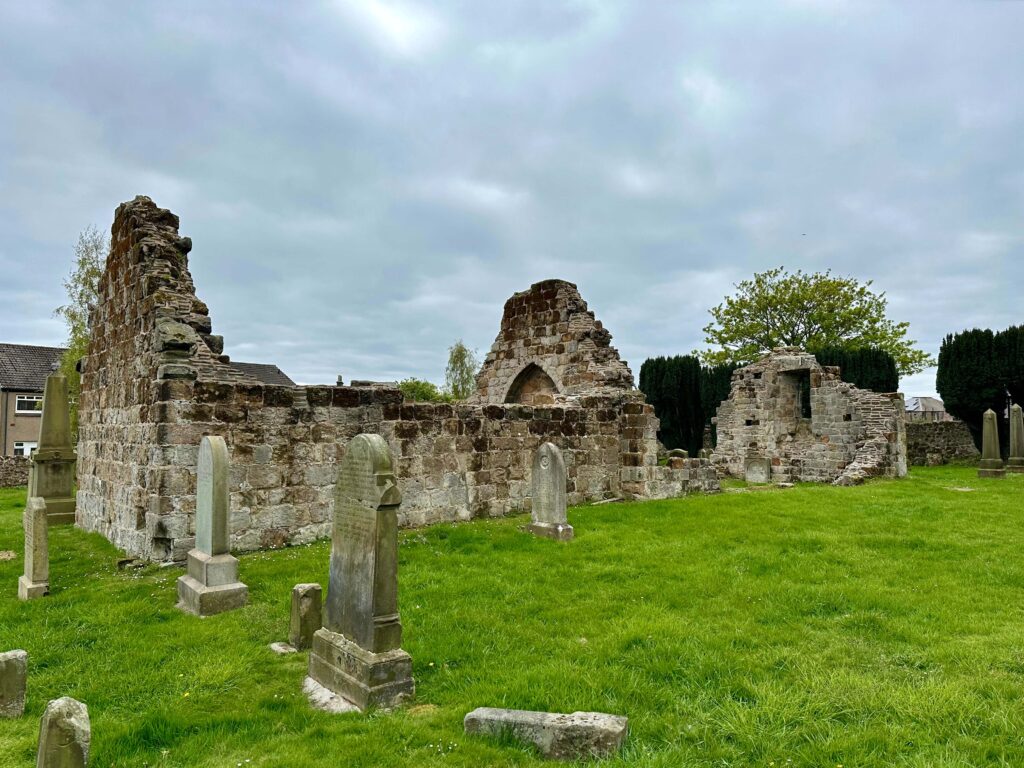
12th century: Burntisland’s origins as a settlement can be traced more certainly to the Kirkton area, where King David I granted the lands to Dunfermline Abbey in 1130. At that time, the Kirkton settlement was known as smaller or wester Kinghorn. The now ruined church at the Kirkton was consecrated (or re-consecrated) in 1243 but it’s likely it existed before then.
Castle: Burntisland Castle’s origins are similarly old – from around 1250. It was built for the Abbot of Dunfermline. The peninsula where it stands above the harbour was originally separated from the Kirkton area by a shallow sea inlet. This is now reclaimed land, but Kirkton Road was originally a causeway over the shallow inlet.
By the 16th century, at each side of this inlet was a mill. The mill on the Castle lands was powered by the tide – a sea mill. The mill on the Kirkton side was powered by the Kirkton Burn. We know John Ged purchased that mill from Dunfermline Abbey in the 16th century.
Harbour: In the 1500s there was a harbour below the Castle to the south. The town of Burntisland developed around the harbour. King James V ordered the harbour be developed and extended and granted the town of Burntisland Royal Burgh status in 1541. This gave the town special trading rights.