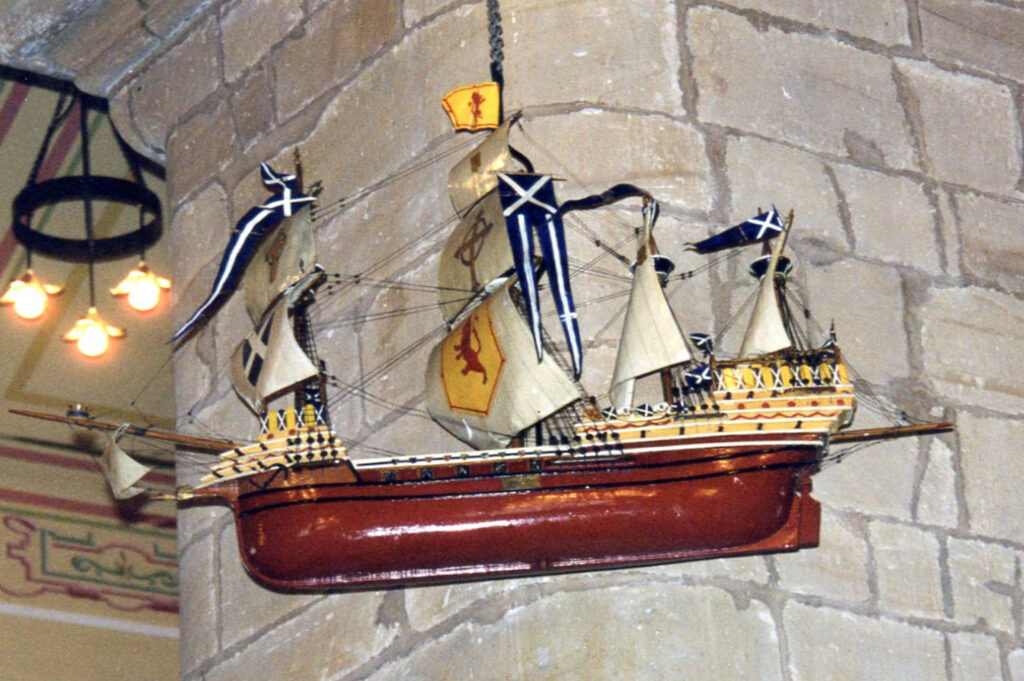
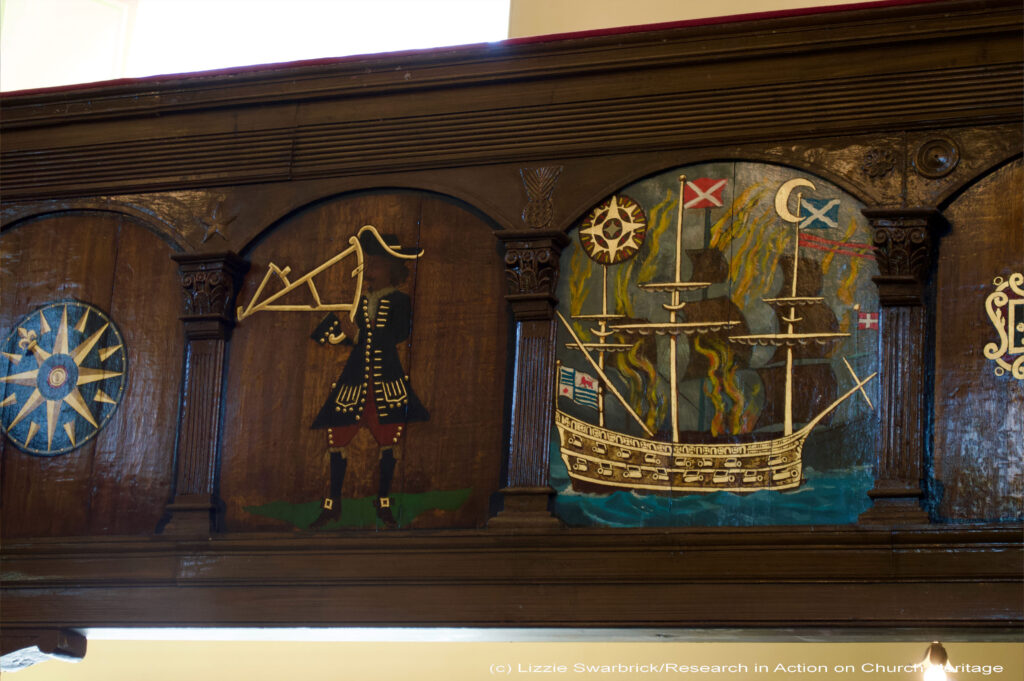
Ship paintings: The paintings of the other ships are fascinating. We know a little of some of them but not their names, or the names of their owners or captains. Captain Andrew Watson is buried in the NE corner of the kirkyard with his wife, son and daughter-in-law. Is his ship represented in the church? One Royal ship is shown flying red and gold flags, not the usual blue and white Saltires. One shows a Scots ship engaging a Dutch vessel seen on fire behind it – does the painting represent an actual skirmish of the Second Dutch War that took place in the Forth off Burntisland?
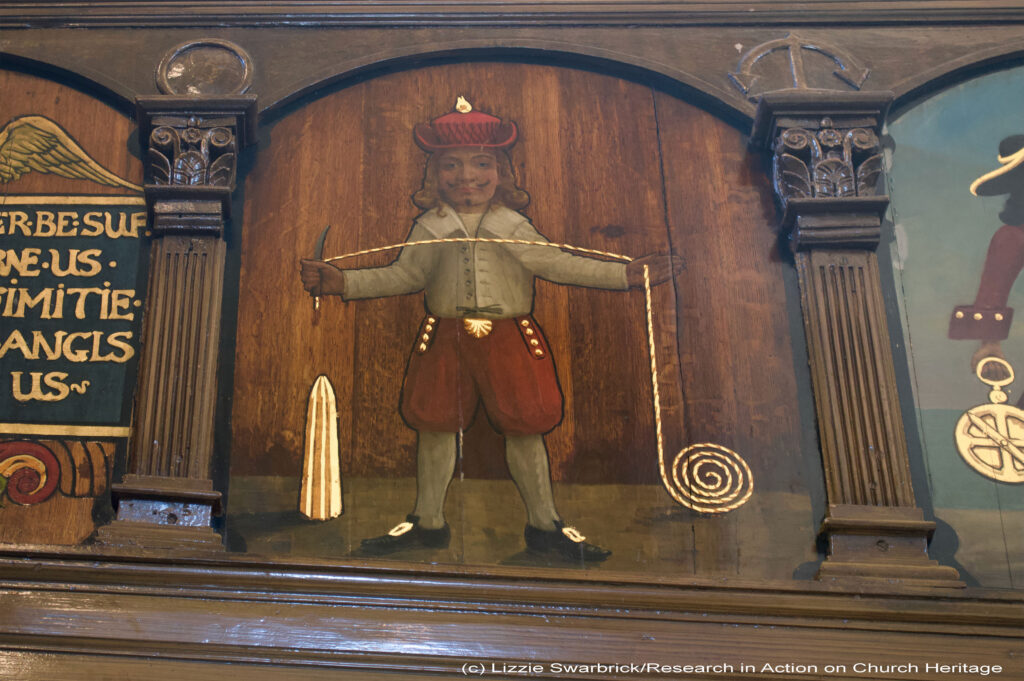
Mariners: The paintings of mariners are also fascinating. They appear in their 17th century garb with buckled shoes, coats, breeches, and hats. They are shown using their instruments of navigation of the time: a cross staff and astrolabe; a back staff (safer in use as less likely to damage your sight looking at the sun!); and fathoming a rope to ascertain the depth of water – and is that a column of wax shown to check whether the seabed is sandy or rocky? Navigation was a highly skilled process before modern instruments or even accurate watches. Add in a rolling, yawing, pitching ship deck, a cloudy sky, and poor maps, and no wonder so many ships and seamen were lost.